




Screw Compressors Built-in Dryer LS
Why Choose Us
As a kind of main power widely used in various fields of industry, the air compressor is applied in textile, ceramics, machinery, manufacture, metallurgy, mining, food, electric, chemical and other industries. Jaguar air compressor is committed to providing energy-efficient, high-quality, outstanding-performance compressed air solutions for global customers. We specialize in producing Rotary Compressor With Dryer, Laser Special Integrated Air Compressor, Rotary Screw Air Compressor Tank Mounted With Dryer, Integrated Screw Air Compressor, Tank Mounted Air Compressor, and other Screw Compressors Built-in Dryer.
Technology Based Factory
We have 140000m3 production base in Xiamen China, including 3 modern office building, 1 provincial technology centre, 1 national R&D experiment centre.
Professional Team
In presently, our company boasts a large team of 900+ employees, we have talent and expertise dedicated to delivering exceptional results.
Advanced Equipment
We have advanced equipment such as High Precision SBN Grinding Machine, Imported DMG MORI CNC Horizontal Machining Center, Imported German Zeiss CMM Measuring Center, Imported Italian Salvagnini Dynamic Laser Cutting Machine to produce and design our products.
Quality Assurance
We have won CE certification, ASME certification, ISO 9001 quality management system, ISO 14001 environmental management system, ISO 45001 occupational health and safety management system and GB/T 29409 Intellectual Property Management Certification.

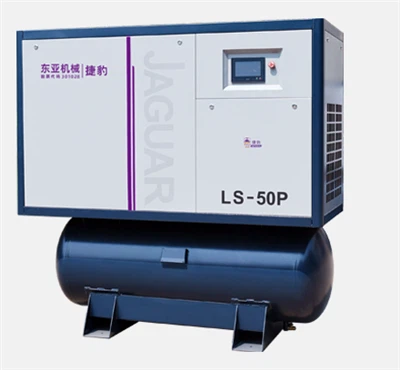

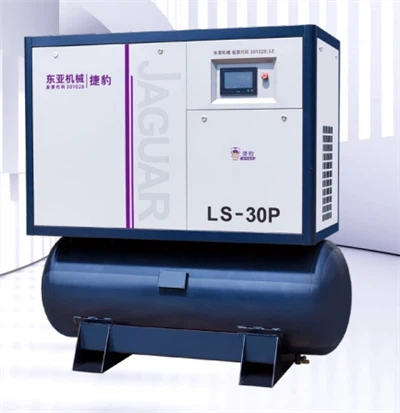
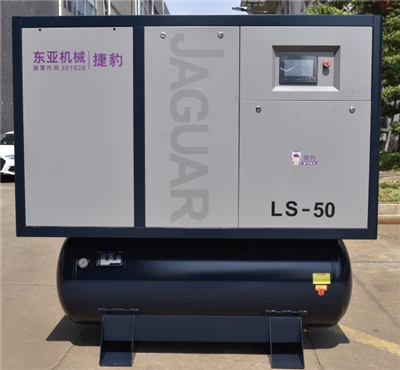
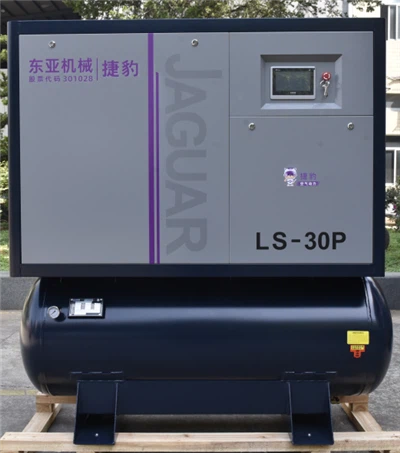
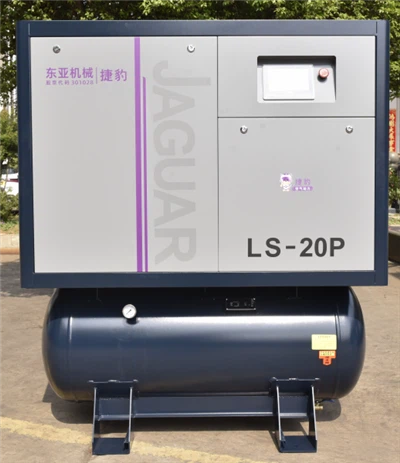

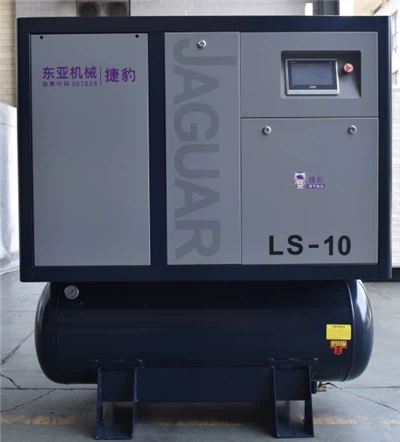
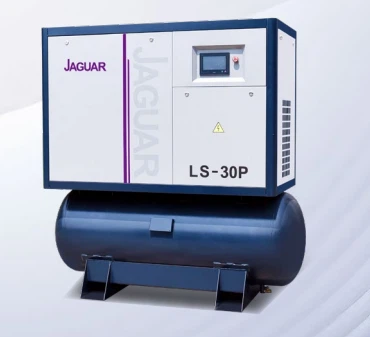

Screw Compressors Built-in Dryer are special types of filter systems that are specifically designed to remove the water that is inherent in compressed air. The basic function of the air dryer is to remove moisture from the air by cooling it with a refrigerant. Thus, the water vapor is condensed, and the air can be compressed. The result is dry compressed air, which can be used in compressed air equipment without causing any damage. A standout feature of these air dryers is that they actively remove the condensation that is caused by air entering the compressed air system to achieve extremely dry compressed air. If you want to know the specifications and prices of Screw Compressors Built-in Dryer, please contact us!
What are Advantages of Screw Compressors Built-in Dryer
Prevents Freezing
If vapor condenses into water, the water can freeze in the face of low temperatures. Freezing can lead to jams in moving components. It can also accumulate on process lines and interfere with process or product fluid movement.
Removes Contamination
Contamination is a serious danger for industries using high-purity compressed air. Areas like plasma generation, food and pharmaceutical products manufacturing, laser cutting and welding, painting, coating and shot blasting all require pure compressed air to function. If water builds up, efficiency decreases, productivity slows or products get damaged.
Halts Water Buildup
Water will build up in small pockets within downstream equipment without moisture removal. Too much buildup can cause sensitive equipment to perform inaccurately, harming production quality and output.
Reduces Microbial Growth
The pharmaceutical and food and beverage industries use compressed air to mix and convey product. Water is prone to bacteria growth, and any water in your condensed air system can quickly lead to food and beverage spoilage or contamination. Additionally, small amounts of microbes in pharmaceutical plant products can result in entire batches being thrown out to avoid health risks.
Improves Efficiency
If your facility uses air-powered equipment and tools powered by energy from compressed air systems, water will reduce its efficiency. It can damage internal components and reduce the power delivered, impacting production.
Inhibits Corrosion
Water is excellent at corroding steel. Components like pipes, drums, vessels and tanks are typically made from steel and will begin to break down when moisture buildup turns to water and corrosion. When corrosion forms, process and product streams can quickly become contaminated.
Type of Screw Compressors Built-in Dryer
1.Refrigerated Air Dryers
These dryers operate on the principle of condensation. Refrigerated air dryers cool compressed air to very low temperatures allowing moisture suspended in it to condense into its liquid form. Once the water has been removed, a dry stream of air can flow onwards to applications that require it.
Applications
Refrigerated air dryers are a popular choice for several manufacturing and service applications requiring compressed air with no detectable moisture. However, they are not suitable for highly sensitive applications where even little quantities of water can be detrimental.
2.Deliquescent Air Dryers
These dryers possess an absorptive mechanism that helps remove moisture from the air that passes through them. In addition, deliquescent dryers use hygroscopic salt tablets that require replacement when saturated.
Applications
Deliquescent dryers can be deployed effectively in hazardous, remote locations that require dry, pressurized air. Examples of applications that benefit from deliquescent dryer use include landfill sites and wood and asphalt manufacturing industries.
3.Desiccant Air Dryers
Desiccant air dryers also use hygroscopic materials (silica gel, activated alumina) to achieve air drying. The absorption setup typically comprises a twin tower drying system with both chambers filled with desiccant materials.
During operation, one tower is actively drying air channeled through it while the second is in a regenerative state (desiccant saturated with moisture is being renewed for further use). Both towers switch back and forth between drying and regenerative phases throughout the operation cycles.
Applications
These types of compressed air dryers are advantageous in moisture-sensitive industrial and commercial applications, including: Mold prevention, Healthcare/medication prescription environments, Food processing, Fabric manufacturing, Ice rinks.
4.Chemical Air Dryers
These dryers utilize hygroscopic materials to achieve moisture removal from pressurized air. A typical setup is a drying unit that contains calcium chloride or lithium bead that pulls moisture out of the air stream passing through it. In addition, high-quality coalescing and particulate filters are often integrated to prolong the lifespan of the drying material.
Applications
Chemical dryers are a good choice for integrating moisture-sensitive chemical manufacturing and food processing applications.
Why add an air dryer to your compressed air system?
Many tools and equipment, driven by compressed air, cannot withstand water or moisture. Many processes, using compressed air, are processing products that cannot withstand water or moisture. Inherent to the compression cycle, free water is often formed in the compressed air circuit.
Untreated compressed air, which contains solid, liquid, and gaseous contaminants, poses a significant risk as it can damage your air system and your end product. Moisture, one of the main components of untreated air, can cause the following problems:
Water in a compressed air system often causes corrosion which leads to rust forming in the compressed air system. Those rust particles will be released and transported through the compressed air system. Corrosion of air or gas-operated instruments giving incorrect measured values, causing interrupts or switches off system processes.
Cause of wear and tear of the inner part of the compressed air line, leading to holes and thus to air leaks, resulting in a pressure drop. Meaning a loss of energy and money.
This can result in damage or failure of the compressed air tools and can cause contamination of the processed products. Free water or moisture in a compressed air system can sustain bacteria growth or the moisture can be absorbed by the processed product leading to quality deviations and product spoilage. For example: may adversely affect the color, adhesion, and surface finish of paint applied with compressed air. This could lead to rejection of your product and affect your profitability. Water can freeze in control lines in cold weather, leading to the malfunction of the controls.
Refrigerated air dryers are one of the most common types used in industrial applications due to their ease of maintenance and relative cost-effectiveness. They are suitable for air-drying applications without special requirements such as a minimum dew point.
The refrigerated air dryer working principle is based on de-humidifying air by rapidly cooling it, condensing it, and draining off the moisture. The operation is like that of a domestic refrigerator or home air-conditioning system.
Refrigerated air dryers de-humidify air through the following phases:
Warm, moist air enters the dryer, which cools it rapidly to about 3°C (37.4°F) in a refrigeration unit. At this temperature, the water vapor in the air condenses into pure water, which collects in a water trap and fed into discharge lines. The warm, gaseous refrigerant is cooled and regenerated in a condenser.
The dry air in the chamber is re-heated to room temperature and fed through an outlet.
Moreover, refrigerated air dryers are available in two variants – cycling and non-cycling.
Cycling dryers are 100% duty cycle machines that can maintain the dew point at a constant temperature.
Non-cycling dryers work by intermittently shutting down and restarting to maintain the required temperature.
Custom Notebook Solutions

A desiccant air dryer system consists of two towers, one for drying the air and the other for regenerating the desiccant. The drying tower contains a porous desiccant material that inhibits water molecules as compressed air from the inlet passes over it.
A less common variant, the single tower desiccant air dryer, comprises a single tower containing a desiccant material that dries air coming in from the environment. Single-tower dryers also contain no mechanical parts and do not require electricity to operate. They are suitable for use in hazardous and corrosive environments.
These instrument air dryers use a desiccant material, hygroscopic substances that exhibit a high affinity for water as the de-humidification agent. These types of compressed air dryers achieve a low dew point, making them suitable for use in colder climates and industries that require super dry air.
There are three main types of desiccant dryer systems – heated, heatless, and heat of compression desiccant air dryers. Let's take a closer look at these below.
Heated desiccant air dryer
Heated desiccant air dryers utilize a source of heating within the drying tower to heat the desiccant material sufficiently to minimize the need for purge air. Typical dew points in heated dryers range from -40°C to -73.3 °C (–40 to –100 °F).
Heatless regenerative desiccant air dryer
Heatless desiccant dryers do not contain a heated system in the regenerating tower; instead, they utilize "purge air" to expel moisture from the tower. Typical dew points in heatless dryers range from -40°C to -73.3 °C (–40 to –100 °F).
Heat of Compression
A heat of compression air dryer uses both towers simultaneously to maintain a uniform temperature. This design allows for lower operating costs but with a less consistent dew point.
Membrane Air Dryer Working Principle
Membrane dryers use permeable membranes similar to nitrogen separation membranes or CO2 separation membranes to extract water vapor from process air. These systems are convenient to use, more cost-effective, and require less maintenance since they have no moving parts. They are suitable for low volume air separation.
Certifications
Jaguar air compressor has won CE certification, ASME certification, ISO 9001 quality management system, ISO 14001 environmental management system, ISO 45001 occupational health and safety management system and GB/T 29409 Intellectual Property Management Certification.


Frequently Asked Questions
Q: What is one type of compressed air dryer?
Q: What are the two types of refrigerant dryers?
Q: What is dryer and its types?
Q: What is the principle of dryer?
Q: What are the four methods of drying?
Q: What is refrigerant type air dryer?
Q: What are the parts of a compressed air dryer?
Q: What is the most common type of dryer?
Q: Does a screw compressor need a dryer?
Q: What is tunnel dryer?
Q: How does the heat of compression dryer work?
Q: Why use a compressed air dryer?
Q: What is an air compression system?
Q: What is the SI unit of compressed air?
Q: What is compressed dry air used for?
Q: How does a heat of compression air dryer work?