




Low Pressure Screw Air Compressors Di
Why Choose Us
As a kind of main power widely used in various fields of industry, the air compressor is applied in textile, ceramics, machinery, manufacture, metallurgy, mining, food, electric, chemical and other industries. Jaguar air compressor is committed to providing energy-efficient, high-quality, outstanding-performance compressed air solutions for global customers. We specialize in producing Low Pressure Screw Compressor, High Flow Low Pressure Air Compressor, High Cfm Air Compressor, Screw Air Compressor for Textile Industry, Low Pressure Air Compressor for Textile, Large Discharge Screw Air Compressor, Low Pressure High Discharge Compressor, and other Low Pressure Screw Air Compressors.
Technology Based Factory
We have 140000m3 production base in Xiamen China, including 3 modern office building, 1 provincial technology centre, 1 national R&D experiment centre.
Professional Team
In presently, our company boasts a large team of 900+ employees, we have talent and expertise dedicated to delivering exceptional results.
Advanced Equipment
We have advanced equipment such as High Precision SBN Grinding Machine, Imported DMG MORI CNC Horizontal Machining Center, Imported German Zeiss CMM Measuring Center, Imported Italian Salvagnini Dynamic Laser Cutting Machine to produce and design our products.
Quality Assurance
We have won CE certification, ASME certification, ISO 9001 quality management system, ISO 14001 environmental management system, ISO 45001 occupational health and safety management system and GB/T 29409 Intellectual Property Management Certification.


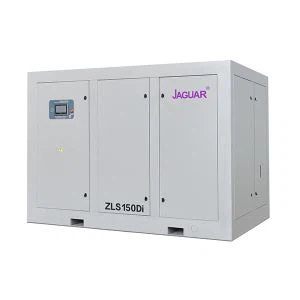


Low Pressure Screw Compressor is a positive displacement machine that uses rotary motion. An opening valve sucks gas into the compressor chamber. Located in the chamber are the two screw rotors; when the machine is on, they will rotate at high speeds. As the impellers rotate, they trap and isolate air in the cavities between the rotors, thus moving the air down the chamber. If you want to know the specifications and prices of Low Pressure Screw Air Compressors, please contact us!
What are Advantages of Low Pressure Screw Compressor
Reducing Your Operational Costs
As energy costs are a compressor's biggest lifecycle cost, it's crucial that you consider the energy efficiency aspect of a compressed air installation when searching for your next compressed air investment. We are always looking for new ways to increase the energy savings of your production process, whether that means raising the industry standards for all low pressure screw compressors, optimizing our solutions to fit each process, or offering you additional ways to recover energy.
High Uptime
Low Pressure Screw Compressor can help you avoid unexpected downtime of your process. Reliability starts at the core of our units: with our components. The cooling jacket cools both bearings and the element housing to keep the element at the lowest possible temperature, which increases the lifetime of your components.
Avoid Unexpected Installation Costs
The whole is greater than the sum of its parts: by offering you a fully equipped unit that is ready for operation upon arrival, you not only avoid any unexpected installation costs, it also ensures that all components are aligned to work together and offer you the best performance. For instance, the water-cooled aftercooler which cools the process air is a necessary component as hot air can compromise the quality of your product.
Type of Low Pressure Screw Compressor
Dry Screw Compressors
Similar to the reciprocating compressor, the screw compressor is a positive displacement machine. The compression is repeated for each lobe of the rotors. Therefore a 4/6 profile with four lobes on the male rotor has four compression cycles during each rotation of the male rotor.
Wet/Oil-Flooded Screw Compressors
Oil-flooded screw compressors are similar to oil-free screws except that they inject oil, or rather, flood the process chamber with oil, which mixes with the process gas during the compression cycle.
Oil flooded screw compressors are available for capacities up to 28,000 m3/h and discharge pressure up to 100 barg. The injected lubricant can seal off the clearances between the rotors within the casing.
Common Low Pressure Screw Compressor Problems
01.Air Compressor Will not Start
Check supply power. Check for errors on display. Check emergency stop is out. Check and reset the overload relay. If it's a new installation, check the phase sequence.
02.Compressor Shuts Down on High-Temperature
Ambient temperature too high or not enough ventilation.
Too low oil level
Wrong type of oil
Dirty oil cooler
Thermostatic valve not not working
Dirt / obstruction in oil lines
03.Compressor Runs but Will not Load
Check electrical power to solenoid valve
Check solenoid valve coil and solenoid valve operation.
Check working of inlet/loading valve
04.Low Capacity / not Enough Pressure
If the capacity of the air compressor is really too low, check the following:
Does the inlet valve fully open?
Check differential pressure over oil separator. Replace separator when necessary.
Check if inlet filter is clean
Check and replace compressed air filters (if installed).
05.Safety Valve Blows / too High Pressure
If the safety valve is located before the oil separator, check differential pressure of oil separator.
06.Oil in compressed air
Oil separator old / saturated
Scavenge line plugged
Too high running temperature
Too high oil level
Wrong type of oil used
Minimum pressure valve not working
07.Water in Compressed Air
Check the condensate trap for good operation. There should be water coming out every few minutes. If you open up the manual drain, there should only a little water be coming out.
If you have a compressed air dryer, check the dew point.
Compressor overload relay trips
Check the current draw with a current clamp meter.
If the motor draws excessive current:
Try to turn the compressor by hand. It should be possible to turn it around. It should turn around smoothly, without any 'hiccups' (be sure to completely shut down the air compressor!).
Check the isolation of the motor winding. Should be in the mega-ohms (you need an isolation tester / high voltage ohm meter for this).
Check the voltage when the compressor is running. If the voltage drop significantly when the compressor starts/runs, you have a bad connection somewhere. Check all relays, fuses and electrical connections.
Check if all phases are present
Accessories for Low Pressure Screw Compressor function
Air Filter: The air filter is a pleated paper filter designed to primarily filter dust particles from the air.
Intake Valve: The loading, unloading, and pressure adjustments in the low-pressure screw air compressor are facilitated by the opening and closing of the intake valve.
Pressure Switch: The pressure changes in the low-pressure screw air compressor control the intake valve electromagnetic valve, regulating the opening and closing of the intake valve, consequently controlling the motor. The pressure switch can be configured to a maximum pressure value; when this pressure is reached, the intake valve closes, sending a stop delay signal to the motor. Simultaneously, a minimum pressure value can be set, prompting the intake valve to open or the motor to restart when the pressure drops to this value.
Outlet Check Valve: After the compressed air enters the air tank from the compressor, the outlet check valve prevents the compressed air from flowing back into the low-pressure screw air compressor when it stops.
Safety Valve Function: The safety valve comes into play if the pressure switch is improperly adjusted or fails, resulting in the pressure in the oil and gas barrel exceeding the rated pressure by 0.1MPa. It opens to safeguard the low-pressure screw air compressor unit.
Pressure Maintenance Valve: Positioned at the outlet of the oil-fine separator above the oil-gas barrel, this valve's opening pressure is set to approximately 0.45MPa.
Before you start using an air compressor, it's essential to take certain safety precautions to ensure a safe working environment. By following these steps, you can minimize the risk of accidents and ensure the longevity of your equipment. Learn how to use an air compressor safely by conducting a pre-operation inspection.
Before operating the air compressor, conduct a thorough inspection to ensure everything is in proper working condition. Check for any signs of damage, leaks, or loose connections. Inspect the air filters and clean or replace them if necessary. Verify that the pressure relief valve is functioning correctly. By performing this inspection, you can identify any potential issues and address them before starting the compressor.
Proper installation and grounding are crucial for the safe operation of an air compressor. Follow the manufacturer's guidelines for installation, including proper ventilation and clearances. Ensure that the compressor is securely mounted on a stable surface. Additionally, make sure the compressor is properly grounded to prevent electrical hazards.
Inspect all hoses, fittings, and other accessories for any signs of wear, damage, or leaks. Replace any damaged components immediately. Ensure that all connections are tight and secure. It's also important to use the correct type and size of hoses and fittings for your specific application.
Using an air compressor that is properly sized for your intended applications is crucial for safe and efficient operation. Check the compressor's specifications and ensure it can handle the required air pressure and volume. Using an undersized compressor can lead to overheating and premature wear, while an oversized compressor may result in inefficient operation and unnecessary energy consumption.
Certifications


Frequently Asked Questions
Q: What is the pressure limit on a screw compressor?
Q: What is the minimum pressure for a compressor?
Q: What is high pressure and low pressure in compressor?
Q: What is a good compressor pressure?
Q: How do you control the pressure of a screw compressor?
Q: How do you size a screw compressor?
Q: How does a low pressure compressor work?
Q: What causes low pressure in a compressor?
Q: What is main difference between low pressure and high pressure?
Q: What is CFM in compressor?
Q: How do you calculate compressor pressure?
Q: What is a screw compressor used for?
Q: How pressure is increased in compressor?
Q: Which is better piston and screw compressor?
Q: Which bearing is used in screw compressor?
Q: What is minimum pressure valve?